
FLORIDA FAIR CREDIT REPORTING ACT (FCRA) ATTORNEYS
EXPERIENCED FCRA ATTORNEYS FIGHTING FOR EMPLOYEE RIGHTS
ABOUT THE FAIR CREDIT REPORTING ACT (FCRA)
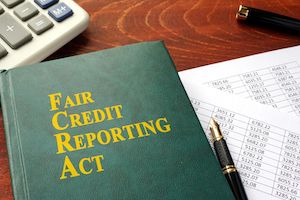
The Fair Credit Reporting Act (FCRA) regulates much more than the “credit report” or credit score you hear so much about. The FCRA offers valuable protections for employees (or applicants) when their personal information is used to make employment decisions. Were you wrongfully denied employment due to a background check? You may be a victim of a Fair Credit Reporting Act violation.
Before any employer can conduct a background check by obtaining a “consumer report,” the employer must do several things to ensure compliance with the Fair Credit Reporting Act (“FCRA”).
For example, an employer must tell the applicant that such information in the consumer report may be used for decisions related to employment. The employer’s FCRA notice and consent by the employee to the applicant must be in writing and in a stand-alone format. In fact, the FCRA notice and consent by the employee cannot be buried in the fine print of an employment application. Additionally, an employer needs written permission from the applicant or employee to conduct the background check.
YOUR RIGHT TO DISPUTE BACKGROUND CHECK RESULTS
Under the FCRA, employers cannot simply reject an applicant based on information in a background check without first giving the applicant a reasonable period of time to review the report and dispute the information.
In other words, as the applicant, you are entitled to dispute the information contained in your background check before the employer takes any adverse action against you, including not hiring you. This notice is referred to as “pre-adverse notice” under the FCRA. The same notice must also be provided to current employees subjected to background checks affecting reassignments, promotions, and terminations.
PRE-ADVERSE ACTION NOTICE AND ADVERSE ACTION NOTICE
A “pre-adverse action notice” informs an employee or applicant of the right to see information being reported to the employer in a consumer report and to correct inaccurate information. The notice must include a copy of the consumer report and the Consumer Financial Protection Bureau’s Summary of Rights. The employee must be given a reasonable time to respond to the report. A fairly accepted standard is to allow the employee five business days between the pre-adverse action notice and the adverse-action notice.
The “adverse action notice” must include the name, address, and phone number of the consumer reporting company that supplied the report; a copy of the consumer report; a statement confirming that the company supplying the report did not make the decision to take the unfavorable action and can’t give specific reasons for it; and a notice of the your right to dispute the accuracy or completeness of any information the consumer reporting company furnished, and to get an additional free report from the company if the person asks for it within 60 days.
CONSUMER REPORTING AGENCIES
Enacted in 1970, the FCRA grants to consumers strong rights regarding information that companies like Defendant trade about them. Specifically, Congress has emphasized that “the consumer has a right . . . to correct any erroneous information in his credit file.” S. Rep. No. 517, 91st Cong., 1st Sess. 2 at 2 (emphasis added). Through the FCRA, Congress codified such right, establishing “the right of a consumer to be informed of investigations into his personal life.” Id. at 1 (emphasis added).
Key to such consumer oversight are the FCRA’s disclosure provisions, which promote the FCRA’s broader goals of fair and accurate credit reporting by requiring consumer reporting agencies (“CRAs”) like Defendant to disclosure to consumers, on their request, the troves of information they collect and sell about consumers. 15 U.S.C. § 1681g. This information is commonly known as a “file disclosure.” In fact, each CRA is required by the FCRA to provide consumers with copies of their consumer files without charge every twelve months, after a credit denial and in other limited circumstances including, when a person (or company) has taken an adverse action against a consumer because of information in the report. 15 U.S.C. § 1681g(a).
The term “file,” when used in connection with information on any consumer, means “all of the information on that consumer recorded and retained by a consumer reporting agency regardless of how the information is stored.” 15 U.S.C. § 1681a(g).
Along with the information itself, CRAs are also required to reveal to consumers “the sources of the information” in consumers’ file disclosures. § 1681g(a)(2). Unfortunately, sometimes CRAs deprive consumers of their rights under the FCRA by willfully failing to provide them with complete and truthful information it sells about them to employers. A CRA’s failure to timely provide a consumer with a full file disclosure potentially violates the FCRA.
We have successfully represented people who lose job opportunities because CRAs supply employers with consumer report falsely attributing certain items, including convictions, that do not belong to them. If you have lost a job opportunity because false, misleading, or inaccurate information was included in your background check, contact us today for a free case review.
DOES THE FCRA APPLY?
But there’s more. Incredibly, sometimes companies, including both CRAs and employers, argue they are not subject to the FCRA because the reports they utilize for employment purposes fall outside of the FCRA’s definition of a “consumer report.” But as one court recently explained, a party is not outside the reach of a federal statute simply because it says so. To conclude otherwise, of course, would obviate the need for laws at all.
For example, some CRAs use automated processes to web-scrape criminal histories from court websites and then assign them to specific consumers based on name alone. Such records are often misleading, inaccurate, or simply false. Those records are then sold to employers who rely on them for hiring decisions. Unfortunately, in some instances, people lose jobs opportunities because of background check generated by these companies. When that happens, often applicants are not provided with any of the rights afforded to them under the FCRA, including pre-adverse and adverse, before an employer takes adverse employment action against them. Such a scenario violates the FCRA for multiple reasons.
First, if a CRA improperly claims not to be covered by the FCRA, when asked often it will refuse to provide copies of a consumer’s full file. Such a refusal likely violates 15 U.S.C. § 1681g(a), which requires that a CRA provide not only “all information”, but also “the sources of the information” in the consumer’s file, and comprehensive list of everyone, including end-users, to whom the CRA has provided a report about the consumer. 15 U.S.C. § 1681g(a)(1)–(3).
Second, CRAs that improperly claim not to be covered by the FCRA often violate 15 U.S.C. §§ 1681b(b)(1)(A)(i)-(ii) by providing consumer reports used for employment purposes without first obtaining from the employer to whom the report is sold certification that the employer first complied with the disclosure, authorization, and notice requirements set forth in 15 U.S.C. §§ 1681b(b)(2)(A)(i)-(ii).
Third, if a CRA improperly claims not to be covered by the FCRA, it also likely violates 15 U.S.C. § 1681k. It does so by furnishing consumer reports containing public information likely to have an adverse effect on a consumer’s ability to obtain employment but failing to provide at the time notification to the consumer that such information was being reported and to whom it was being reported. Such notifications are key, and required by the FCRA.
If you believe that a company has improperly denied it is subject to the FCRA, and you lost a job opportunity as a result, please contact us for a free case review.
CASE STUDY
Recently, our law firm represented a former employee of a national employer who lost his job because, according to the results in a background check obtained on her by the employer, he had been convicted of theft. However, our client had no criminal convictions whatsoever. The theft conviction included on the client’s background check belonged to someone else. Not only that, our client’s former employer failed to provide him with the pre-adverse notice required under the Fair Credit Reporting Act. If our client had been given this opportunity, he could have explained the mix-up to his former employer and likely kept his job. Instead, he was fired. So, he called us. We filed a class action lawsuit on his behalf, and on behalf of nearly 50,000 other people who had similar experiences with that employer. The case settled on a class basis for more than one million dollars.
CONTACT A FCRA ATTORNEY IN FLORIDA TO REPRESENT YOUR CASE
If you have been wrongfully denied employment due to a background check, or you feel your FCRA rights have been violated, you may be able to seek damages and sue in state or federal court.
Why is Wenzel Fenton Cabassa, P.A. the best choice for the job? Our firm of dedicated law professionals works tirelessly on behalf of employees, not employers. Our capable attorneys have earned their reputations as tough litigators who secure the best resolution and justice for our clients.
If you feel your rights have been violated and your prospective employer or current employer has not complied with the Fair Credit Reporting Act, you’ll want to speak with a skilled credit protection lawyer. Contact us today for your free, confidential case evaluation.
Offices available in Tampa, St. Petersburg, Sarasota, Miami, Jacksonville, West Palm Beach, and Orlando for your convenience.
Frequently Asked Questions
What is the penalty for an employer violating the Fair Credit Reporting Act?
Employers and Consumer Reporting Agencies that violate the FCRA may face significant consequences. Penalties can include:
- Actual damages (lost wages, harm to reputation, emotional distress).
- Statutory damages of $100–$1,000 per violation (even without proof of actual harm).
- Punitive damages for willful violations.
- Attorney’s fees and court costs for the employee.
*What to do if an employer does a background check without consent?
Employers must give you a clear, written disclosure and get your written permission before conducting a background check using a Consumer Reporting Agency.
If an employer ran a background check without your permission, you should contact a Florida employment background check attorney at Wenzel Fenton Cabassa, P.A.
*What if I am not allowed to correct the mistakes on my background check for employment?
You have the right to dispute errors directly with the background check company (consumer reporting agency). They must investigate within 30 days and correct or delete inaccurate information.
If they refuse, you should reach out to a Florida employment background check violation lawyer at Wenzel Fenton Cabassa, P.A.
*Can an employer use an old arrest or sealed record against me?
Generally, no. The FCRA restricts the reporting of arrests that did not lead to convictions after seven years (with some exceptions). Florida law also protects sealed or expunged records from being used against you. This includes juvenile record which have been sealed or expunged.F
*Can employers in Florida run background checks on current employees?
Yes — but the same FCRA rules apply. Employers must give you written notice and obtain your written consent. If they find negative information, they must give you a copy of the report and notice of your rights before taking any adverse action.
If a background check was ran without your consent, contact the Fair Credit Reporting Act attorneys at Wenzel Fenton Cabassa, P.A.
What is an example of a Fair Credit Reporting Act violation?
Examples include:
- Running a background check without your permission
- Failing to provide a copy of the report before firing or refusing to hire you
- Taking action against you based on incorrect or outdated information
- Not informing you of your right to dispute errors
Can I recover damages if my employer violated the FCRA?
Yes. You may be entitled to compensation for lost wages and in some cases, statutory damages and attorney’s fees.
*How long do I have to file a claim if an employer violated my rights under the FCRA?
You have up to 2 years from the time you learn about the violation to file a claim, but no more than 5 years from when it actually happened.
*Can I sue for a rescinded job offer based on a false background check?
If an employer relied on inaccurate or outdated information and failed to follow FCRA requirements (like giving you a copy of the report and a chance to dispute errors), you may have a legal claim.re
“A very professional and honest firm. Tanya and Chris took good care of my case and held careful consideration for my concerns. I would recommend this firm to anyone in need of legal counsel for work-related disputes.”

RELATED POSTS FOR FAIR CREDIT REPORTING ACT (FCRA)

Can Your Employer Contact You While on Medical Leave? Know Your FMLA Rights in Florida
When you or a loved one faces a medical crisis, the last thing you want to worry about is your job security. That’s …

Can My Employer Refuse Time Off for Surgery?
You have an upcoming surgery or procedure, and you’ve been preparing for weeks or longer. You’ve undergone …
Contact Us
FREE HELP GUIDES
Dealing with unpaid wages, discrimination or wrongful termination? Get the information you need to protect your workplace rights. We offer employment law resources to help you fight for workplace justice.